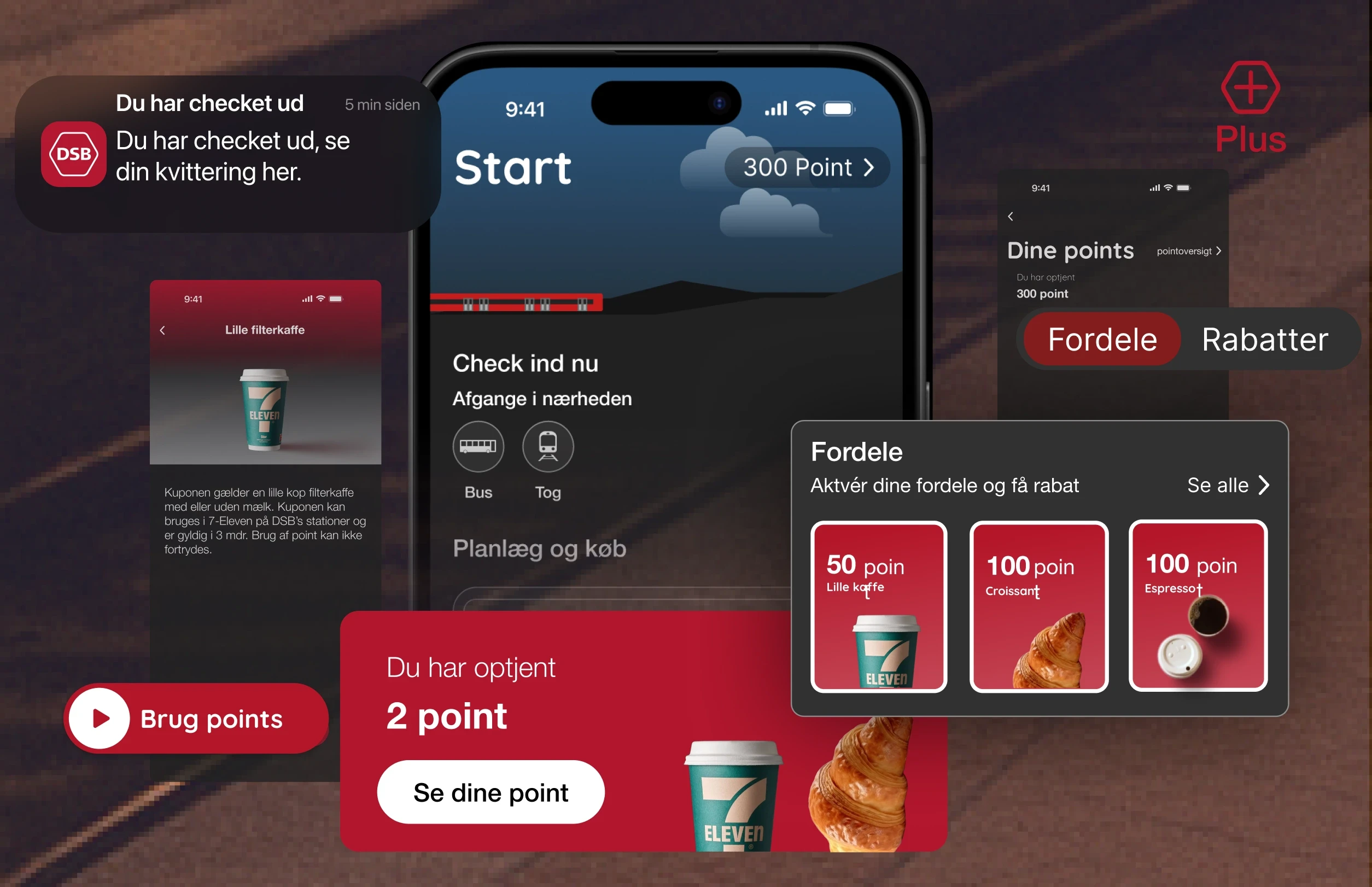
A conceptual solution tackling DSB’s challenges with awareness, confusion …. And hidden value inside the app.
Partner
Accenture Song / DSB
My roles
UX/UI Designer, research, surveys/data collection & testing
Focus
DSB Plus Awareness & Visibility
Target Group
Youth ranging from 17-25 years old.
Team
7 people
Period
29 Sept – 10 Oct 2025 (approx. 1.5 weeks)
DSB gave us a broad brief with seven possible focus areas — ranging from their marketing and brand perception to the structure of their app.
Our task was to investigate, analyse, and select one direction where we could create real value for users — without redesigning the app or changing its core functionality.
As digital concept developers, our work focused on:
Understanding user behaviour
Analysing market and context
Identifying DSB’s challenges
Formulating a clear problem
Developing, testing, and refining ideas
Testing and concluding
Presenting a concept that made sense strategically and practically + a "what’s next?"
We worked with the Double Diamond framework — but in a more iterative, “test-as-we-go” approach.

02 Problem – What did we discover?
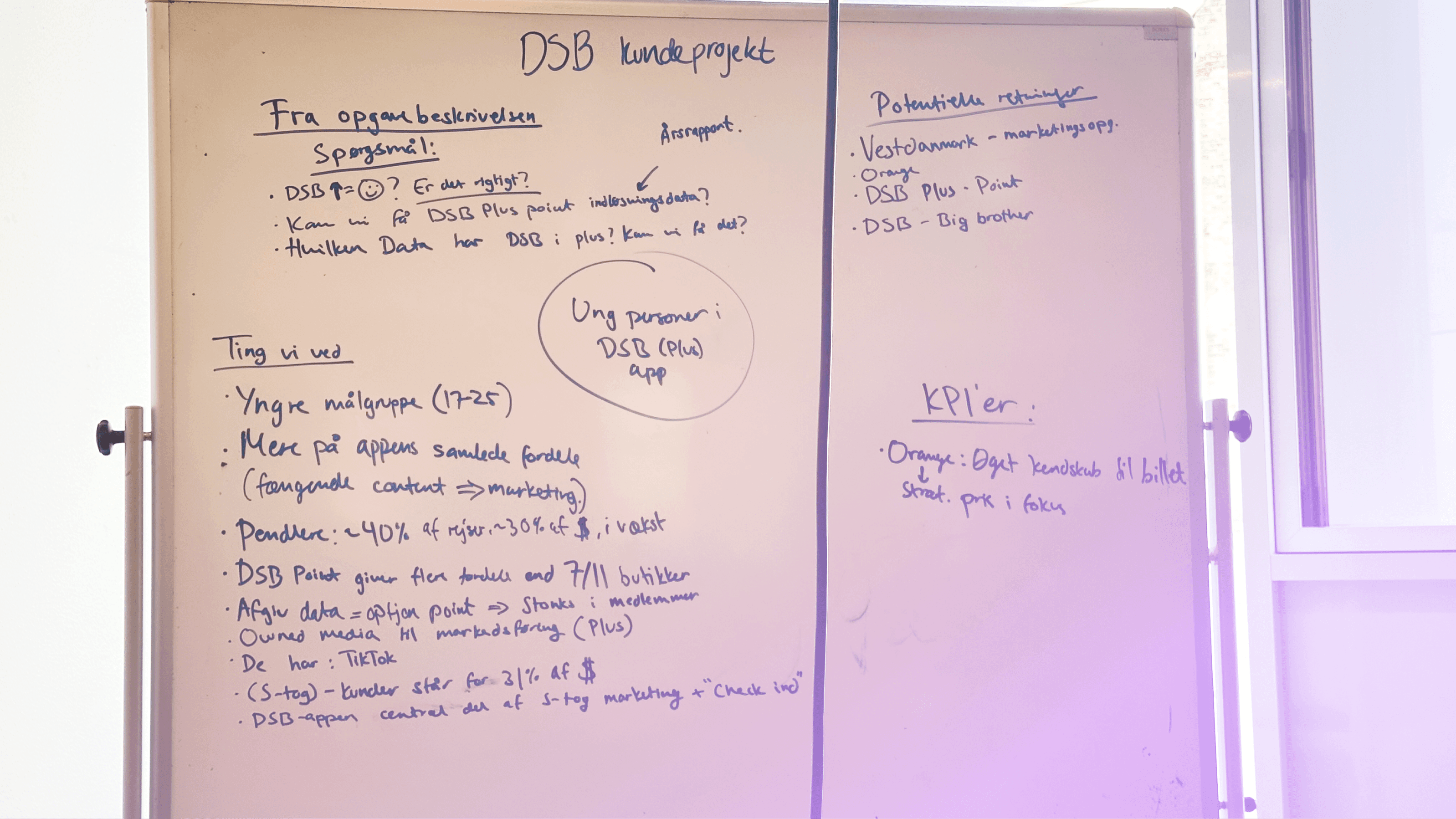
After surveys, interviews, desktop research and small field observations at stations, three findings were crystal clear:
Low awareness of DSB Plus
!
Points are forgotten and unused
!
“Check in” is associated with the Rejsekort
!
“Points… what even are they?”
!
Many young users didn’t understand the point system at all:
“I don’t know what the points do.”
“I forget them every time.”
“That’s something 7-Eleven does — not DSB.”
This showed us the real issue wasn’t unattractive rewards —
but that the value wasn’t visible enough within the existing flow for users to notice or remember it.
So we decided to focus on how young users discover the points, understand their value, and feel motivated to use the app more actively.
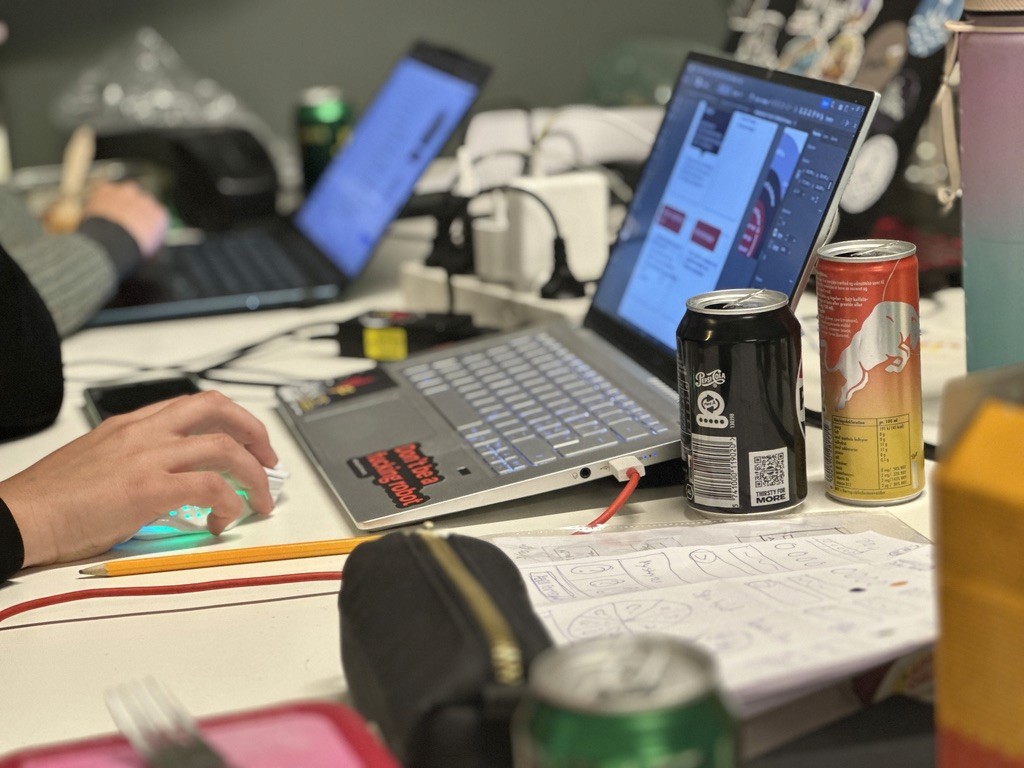

We combined:
Survey analysis
Thematic interview analysis
Observations
User journeys (as-is / to-be)
Value Proposition
Motivation analysis
Desk research
Insight
DSB Plus is a “hidden good”.
It’s valuable — but not visible.
We identified the biggest opportunity right where users already are:
Inside the main flow
In the receipt
On the app’s front page
At the physical station (but at the correct height/angle)
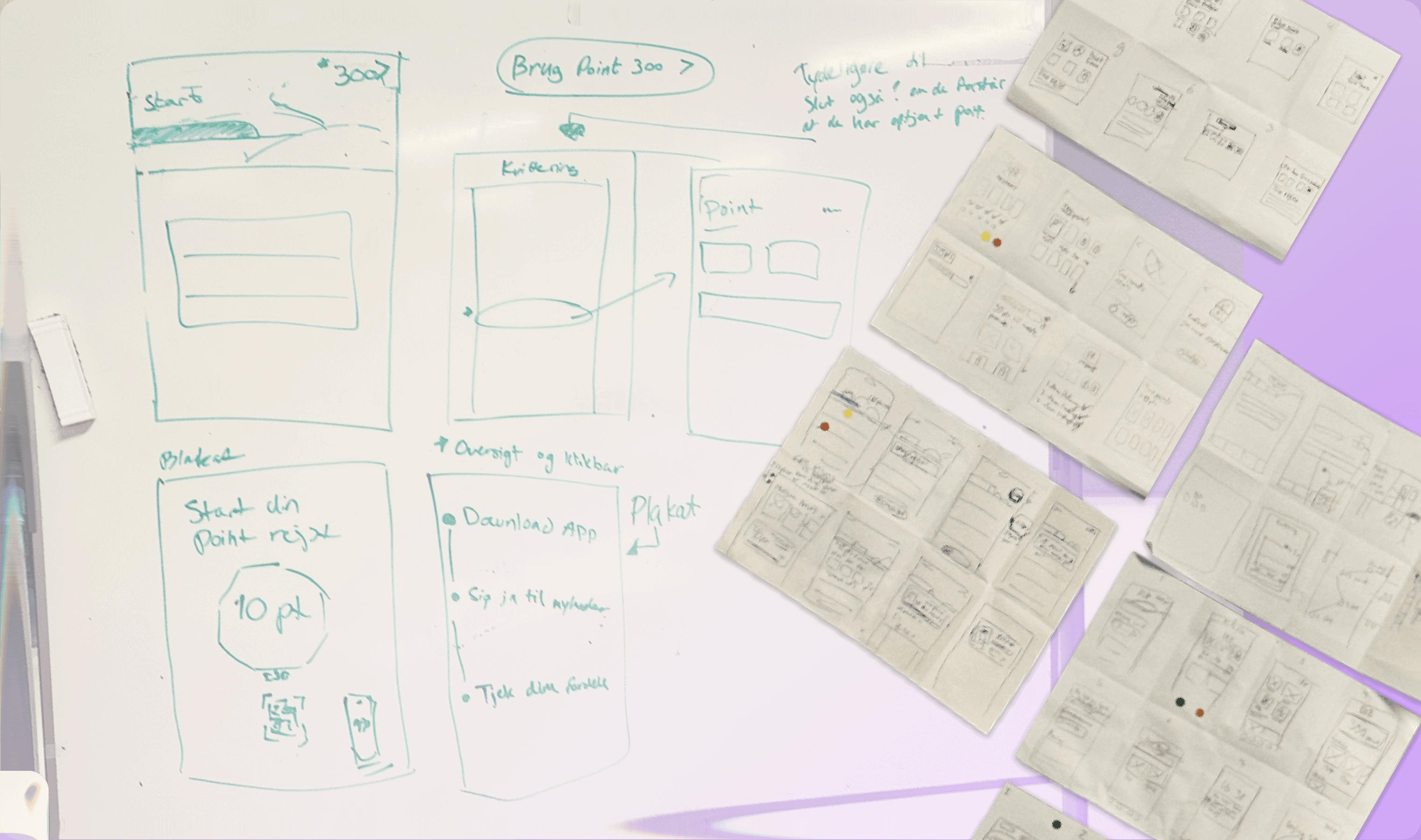
We used:
Crazy 8s
Value proposition mapping
Scenarios
Low-fi sketches
Quick user tests
This is where the idea “Check in, Check out, Check benefits” started to take shape — a small narrative tying the journey and advantages together, without altering the functionality.
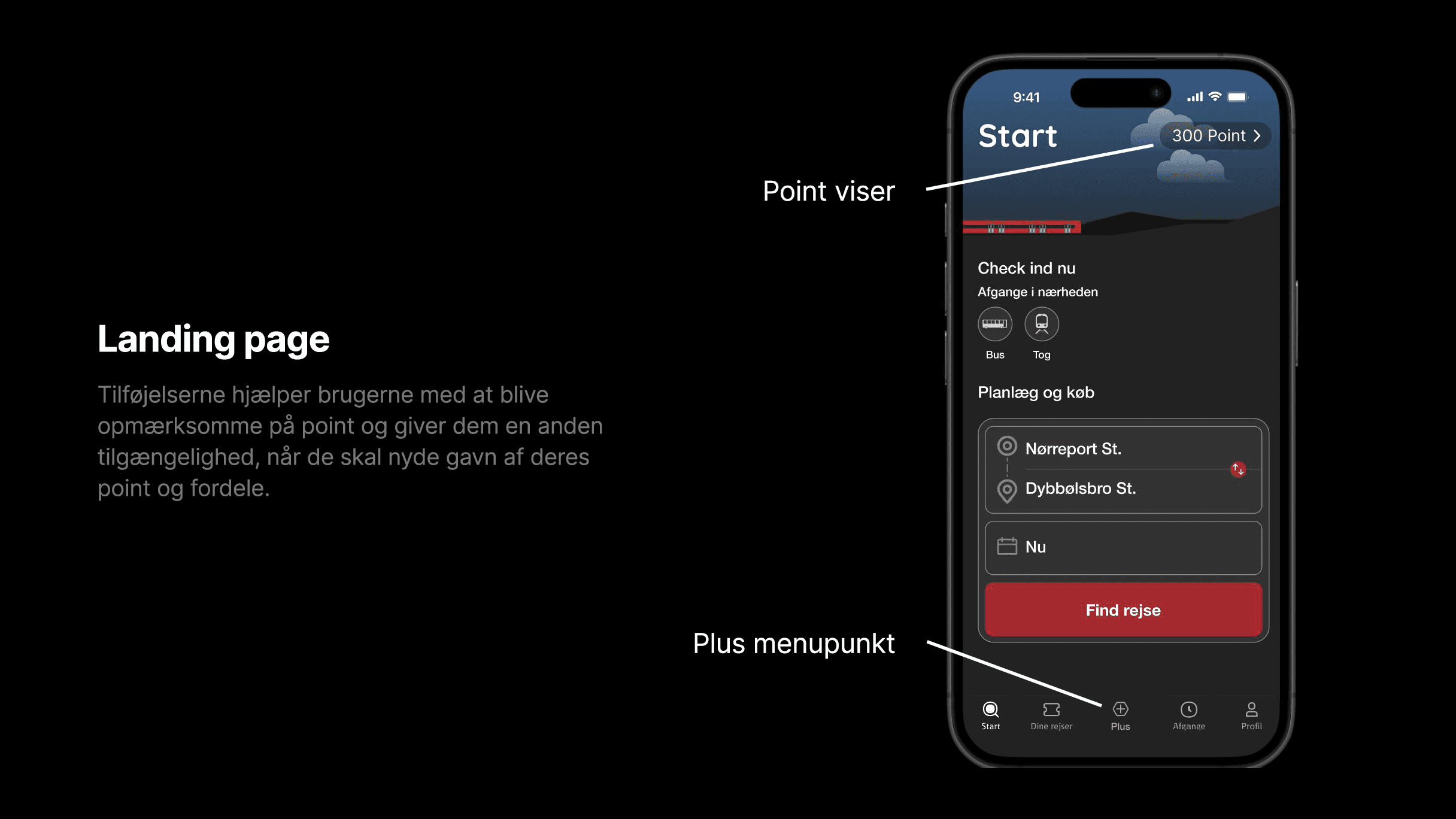
A) Points overview on the front page
Makes the value constantly visible.
Users clicked it immediately.
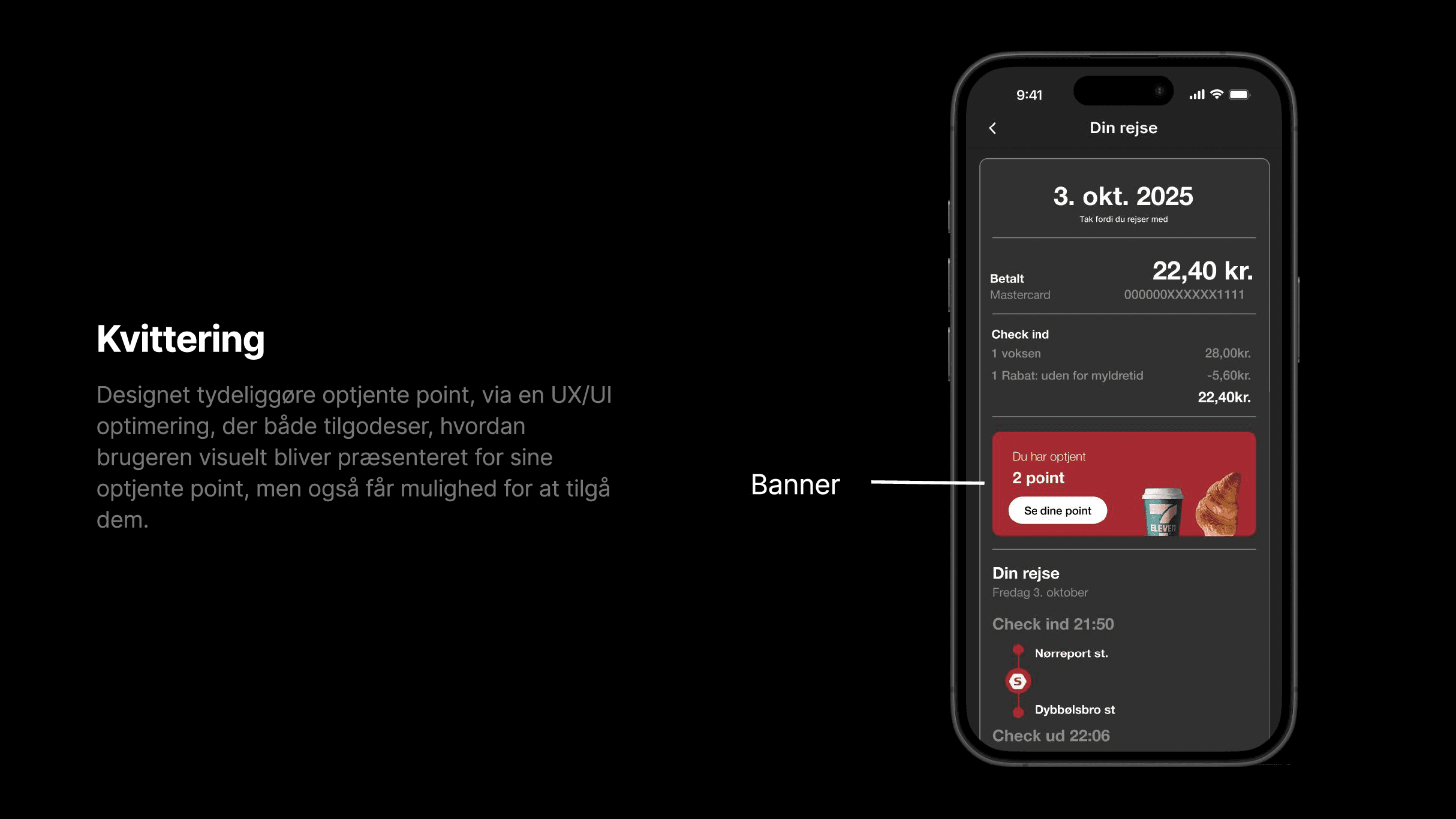
B) Points shown in the receipt flow
A small “reward moment” after the trip makes the benefits concrete and motivating.
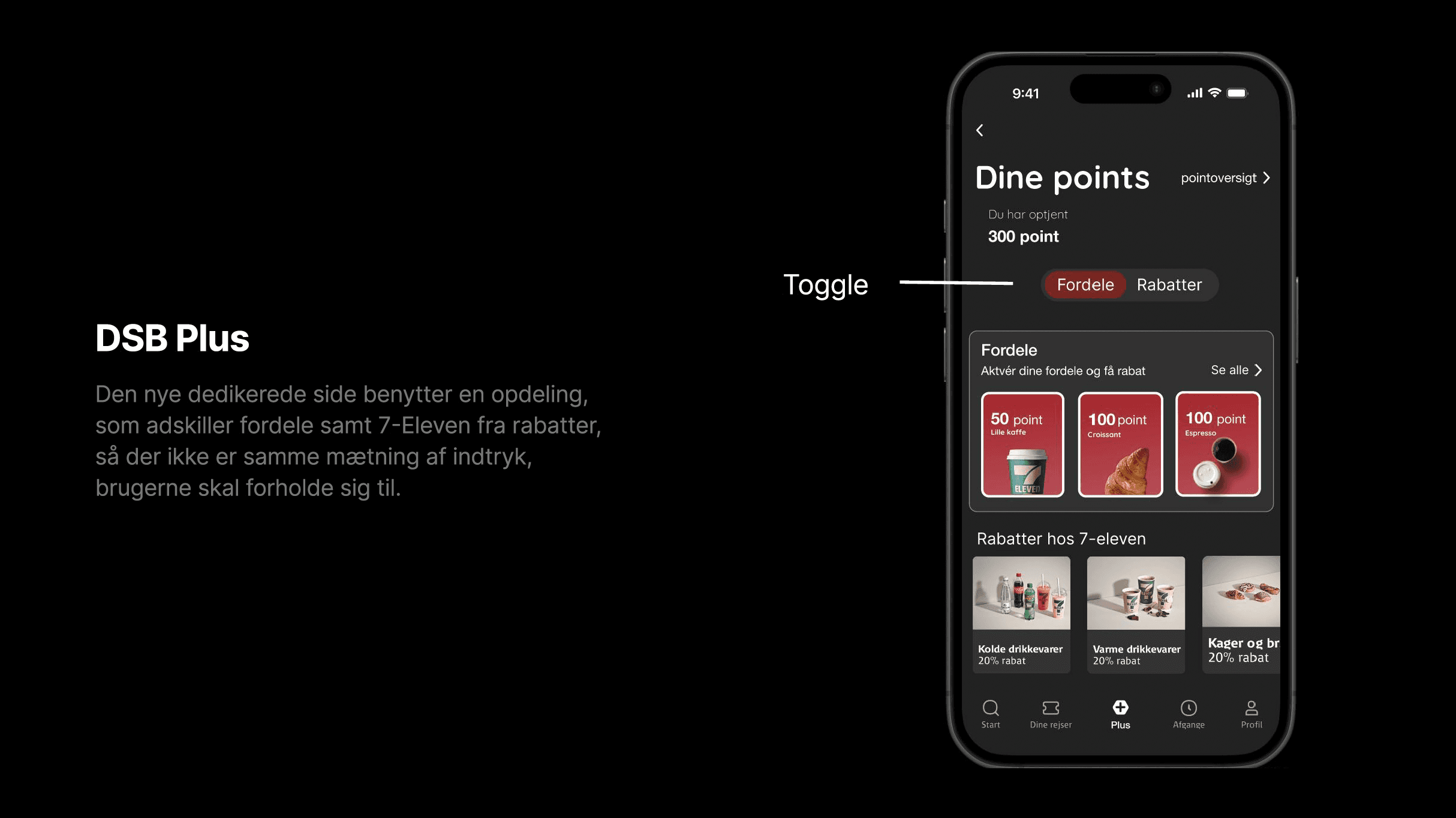
C) A clearer DSB Plus page
Same content, better structure:
Benefits
Discounts
Points
QR code
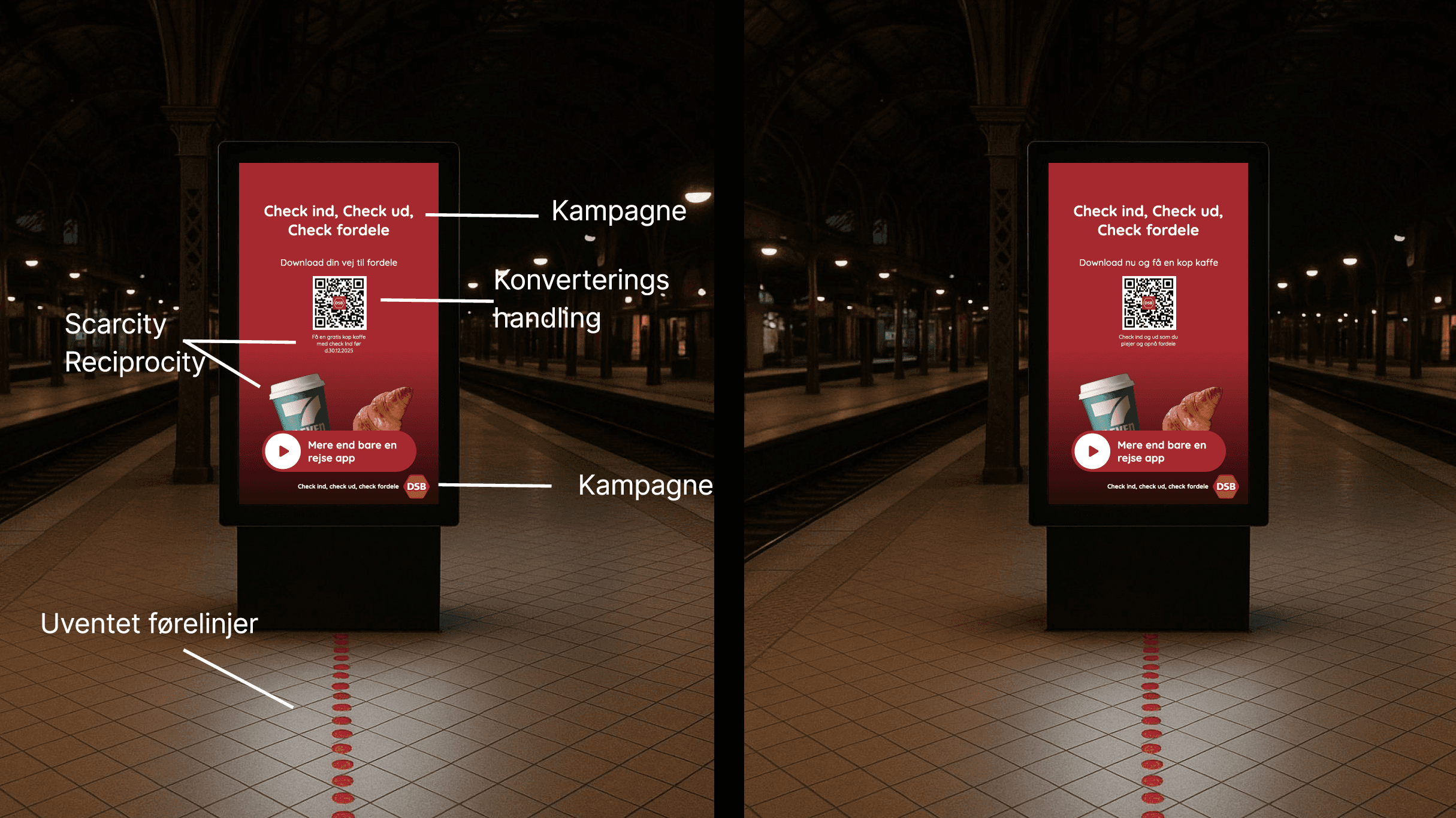
D) Physical nudging at stations
Small floor decals guiding attention towards the messages users actually notice:
Downwards → not upwards.
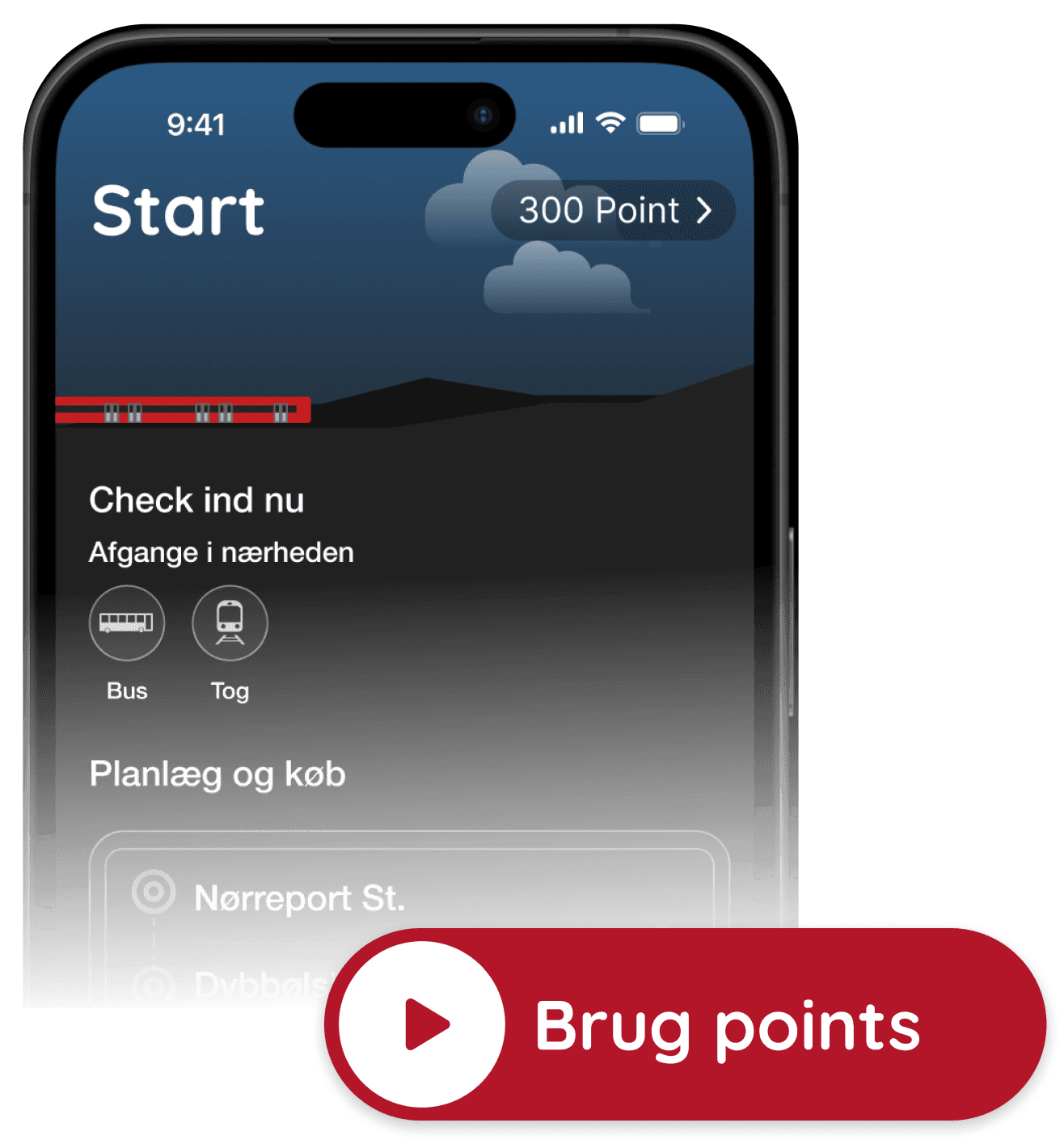
We tested the prototype with three participants from the target group.
2 out of 3 thought the prototype was the real app
!
→ The concept feels realistic and consistent with DSB.
All users noticed the point indicator spontaneously
!
→ Something they had never seen before.
They found DSB Plus on their own
!
→ No guidance needed.
Points were perceived as a real benefit
!
→ Especially when shown directly in the receipt.
Clear interest in DSB Plus
!
→ Once the value became visible and concrete.
Only minor microcopy adjustments needed
!
→ Particularly around explaining the QR code when trying to redeem points.
We chose not to build the “flashiest” solution — but the most effective one.
This project showed that DSB does not lack value in their app.
What’s missing is the visibility of that value.
By adding small enhancements rather than redesigning:
Benefits become clearer
Points become relevant
The app becomes more motivating to use
DSB’s identity grows stronger among young users
For me, this project was an exercise in research, concept development, applying UX thinking to a less conversion-heavy goal, and building something realistic within a very short timeframe.
If the project continued, the next steps could/would be:
Testing the concept at scale with more touchpoints and broader user groups
Exploring how points and benefits could align with travel behaviour over time
Investigating how gamification or personalisation could support the experience without disrupting the flow